Halloween has evolved from a children’s celebration into one of the most high-risk nights of the year for alcohol-related incidents. Across the United States, the combination of drinking, costumes, crowds, and nighttime activity has turned this holiday into a statistical outlier for impaired driving, violent altercations, and liability exposure. For hospitality venues and private hosts, understanding these risks is key to preventing injuries and managing responsibility effectively.
The Halloween Anomaly: A Period of Heightened Risk
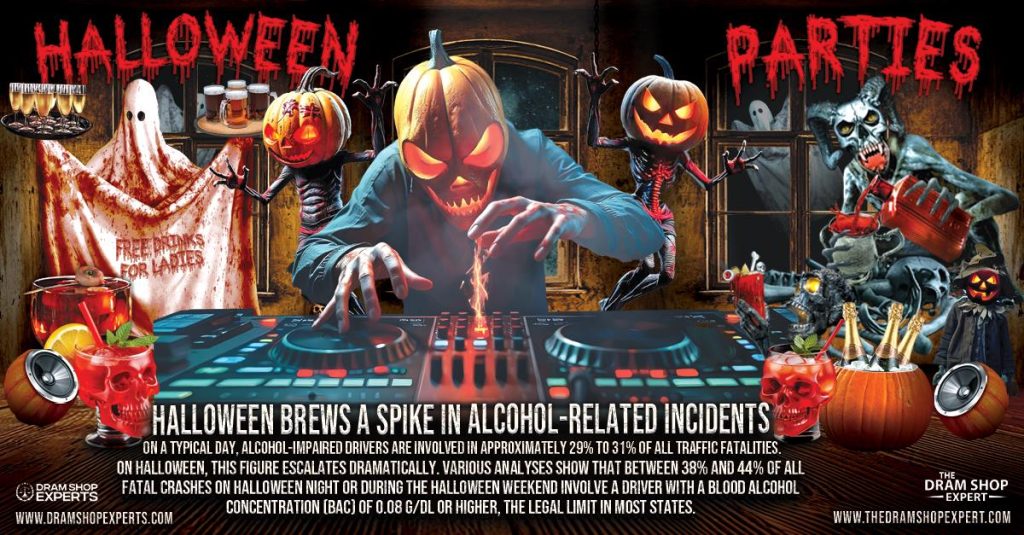
Halloween marks a measurable surge in alcohol consumption and related harm. Reports from national safety agencies reveal that between 38 and 44 percent of all fatal crashes on Halloween involve a drunk driver. This figure far exceeds the average of 29 to 31 percent seen on regular days.
Pedestrian risk also escalates dramatically. Studies show that children are more than twice as likely to be struck by a vehicle on Halloween compared to any other night, and nearly a quarter of all pedestrian deaths on Halloween involve an intoxicated driver. This overlap of heavy drinking and increased foot traffic forms a dangerous mix that law enforcement and public safety experts call a “compound risk.”
Beyond the Road: Rising Crime and Public Disturbances
The dangers of Halloween extend beyond traffic. Research shows violent offenses rise by up to 50 percent on October 31. Insurance reports record a 17 to 24 percent jump in crime-related claims that night. The mix of alcohol and costumes encourages a sense of anonymity, often lowering inhibitions and leading to aggressive behavior.
Crowded venues become hotspots for altercations, with common charges including disorderly conduct, assault, and public intoxication. For bars and nightclubs, these statistics translate into legal foreseeability: when the risk of violence is predictable, owners have a heightened duty to provide adequate security and crowd management.
The Legal Crucible: Alcohol Service and Accountability
Commercial Responsibility and the “Obviously Intoxicated” Standard
Licensed venues that serve alcohol shoulder significant responsibility. In Arizona, for example, state law establishes a clear three-part test for liability: the alcohol must have been sold unlawfully, consumed by the patron, and directly linked to the resulting harm.
Determining whether a guest was “obviously intoxicated” is the central challenge. On Halloween, masks and costumes obscure facial expressions, dim lighting reduces visibility, and loud music limits verbal communication. These conditions make it harder for servers to detect impairment. Some venues argue that such factors reduce their ability to observe intoxication, while others maintain that these same challenges demand stricter oversight.
Servers are encouraged to rely on objective cues—such as the number and type of drinks sold—rather than visual signs alone. Documentation of service refusals and staff training can play a crucial role in reducing exposure if incidents occur.
Social Hosting and Underage Responsibility
Private hosts face similar exposure when alcohol is involved. In Arizona, adults are generally not responsible for intoxicated adult guests, but that protection ends when minors are involved. If underage guests consume alcohol and later cause injury, the host may face civil penalties or even criminal charges.
Homeowners’ insurance rarely covers such incidents. To minimize risk, hosts should control alcohol access, prohibit guests from bringing their own drinks, and actively monitor consumption. Ensuring minors do not drink at all is the only guaranteed safeguard.
Operational and Financial Exposure for Venues
Bars, restaurants, and nightclubs experience a surge in overlapping risks on Halloween. Decorations and lighting setups increase the chance of trip-and-fall injuries, while overcrowding raises the potential for fights and accidents. Over-served guests may initiate altercations or damage property, leading to complex claims involving both premises and alcohol liability.
General liability insurance covers most slip-and-fall injuries or property damage, but it excludes incidents linked to alcohol service. Liquor liability insurance fills that gap. Without it, a single serious injury can cause lasting financial damage. Studies show Halloween brings up to an 81 percent increase in vandalism claims and nearly a 25 percent spike in general crime-related insurance reports.
Halloween as the Beginning of a High-Risk Season
Halloween marks the unofficial start of a four-month period of increased alcohol consumption and public risk. Men aged 20 to 24 consume about four drinks on average during Halloween, setting the tone for the following holidays. Drinking remains elevated during Thanksgiving and Christmas, reaching its peak on New Year’s Eve, when intoxicated driving fatalities increase by almost 89 percent compared to a regular day.
Each holiday carries a distinct risk pattern. Halloween’s challenge is pedestrian safety, Thanksgiving’s is long-distance travel, Christmas involves prolonged celebrations, and New Year’s centers on late-night driving. For venues and hosts, risk management should be treated as an ongoing seasonal commitment, not a one-night precaution.
Proactive Risk Management: Prevention Through Planning
For Licensed Establishments
- Conduct staff training tailored to Halloween events, emphasizing recognition of intoxication despite costumes and dim lighting.
- Enforce strict ID verification with electronic scanners for anyone appearing under 30.
- Perform safety walkthroughs before events to ensure exits are clear and decorations are flame-resistant.
- Avoid drink specials that promote excessive consumption, and encourage hydration by offering free water.
- Create a structured closing procedure to prevent large groups from leaving at once and promote safe transport through rideshare coordination.
For Private Hosts
- Implement a zero-tolerance rule for underage drinking and secure all alcohol before the event.
- Offer food and non-alcoholic options to slow drinking and reduce intoxication.
- Stop serving alcohol at least an hour before the event ends.
- Arrange transportation or overnight accommodations for impaired guests.
- Inspect outdoor and indoor areas to eliminate tripping or fire hazards.
Building a Culture of Responsibility
Halloween’s excitement makes it one of the most celebrated nights of the year, but also one of the most dangerous. The combination of alcohol, crowds, and environmental hazards demands careful preparation. For hospitality professionals, law enforcement, and private hosts, responsible management is the most effective safeguard against tragedy.
By enforcing preventive measures, maintaining documentation, and fostering a culture of accountability, communities can ensure Halloween remains a night of enjoyment rather than one defined by preventable harm.