Frequently Asked Questions
What are the consequences of overserving patrons in Nevada?
The consequences of overserving patrons in Nevada can include legal liability for establishments, potential civil lawsuits, and penalties under state law, particularly if minors are involved. This can lead to significant financial repercussions and damage to the business's reputation.
What are common liquor liability cases in Nevada?
Common liquor liability cases in Nevada often involve the serving of alcohol to minors, over-serving patrons leading to accidents, and incidents resulting from negligent security at establishments serving alcohol.
Can a liquor liability expert witness testify in Nevada courts?
Liquor liability expert witnesses can indeed testify in Nevada courts. Their specialized knowledge is crucial for understanding complex liquor liability cases, particularly those involving the serving of alcohol to minors under Nevada law.
Who can be held liable for liquor-related accidents?
The parties who can be held liable for liquor-related accidents include establishments that serve alcohol, such as bars and restaurants, as well as individuals who provide alcohol to minors or intoxicated persons, under Nevada law.
How does Nevadas dram shop law affect liability?
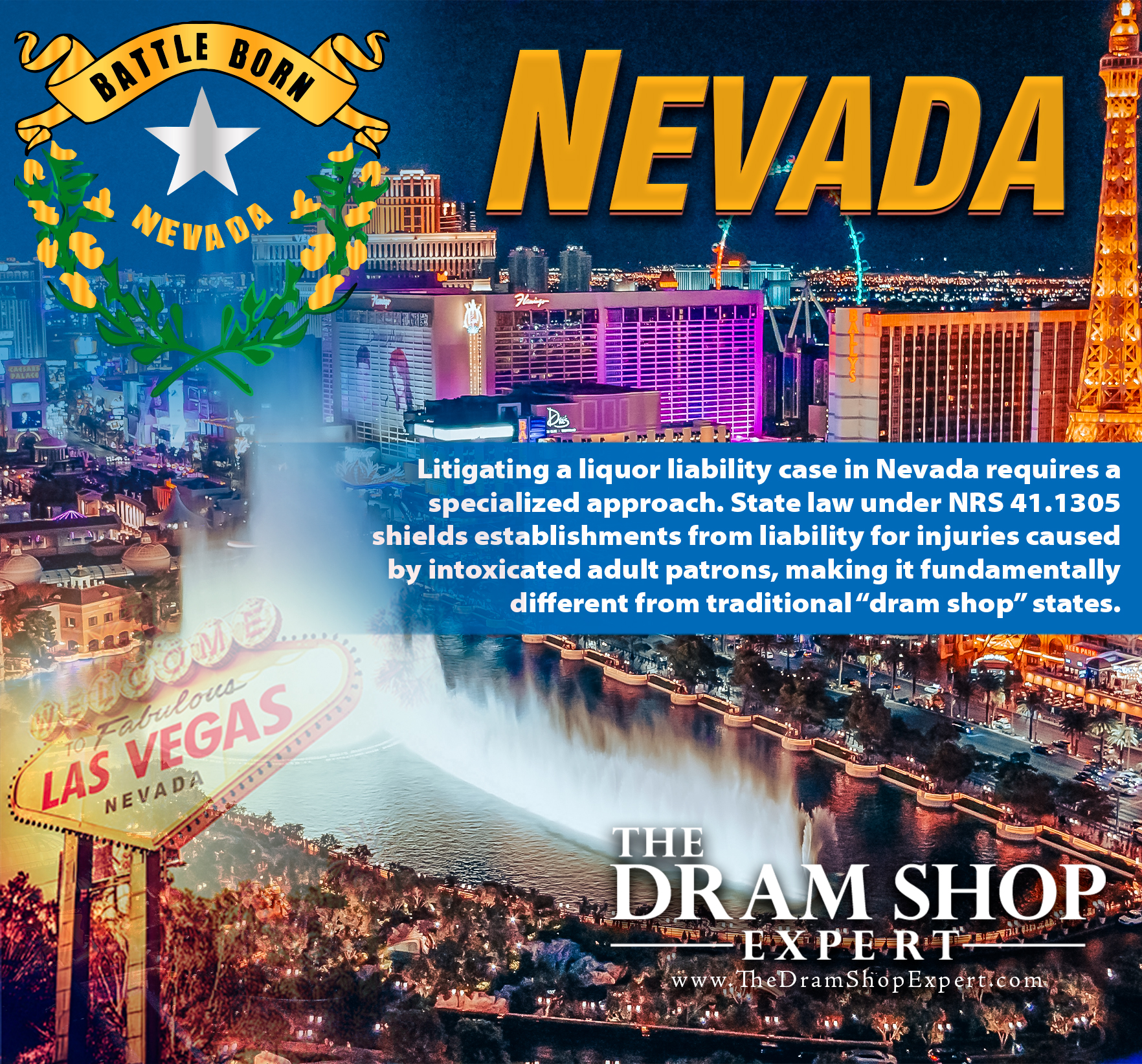
Nevada's dram shop law establishes that alcohol-serving establishments can be held liable for damages if they serve alcohol to minors or visibly intoxicated individuals, significantly impacting their legal responsibilities in liquor liability cases.
What constitutes liquor liability in Nevada law?
Liquor liability in Nevada law refers to the legal responsibility of establishments serving alcohol for damages caused by intoxicated patrons, particularly when minors are served alcohol, as outlined in NRS 41.1305.
What is the role of a liquor liability expert witness in trials?
The role of a liquor liability expert witness in trials is to provide specialized knowledge and analysis regarding liquor laws and practices, particularly in cases involving the serving of alcohol to minors, aiding the court in understanding complex legal standards.
What penalties exist for overserving in Nevada?
The penalties for overserving in Nevada include potential civil liability for damages caused by intoxicated patrons, fines, and possible suspension or revocation of liquor licenses for establishments that violate state laws regarding alcohol service.
How do minors impact liquor liability cases?
Minors significantly impact liquor liability cases by introducing heightened legal responsibilities for establishments. Under Nevada law, serving alcohol to minors can lead to severe penalties and increased liability for damages resulting from their actions.
What evidence is needed for liquor liability claims?
The evidence needed for liquor liability claims includes documentation of the incident, witness statements, proof of alcohol service to minors, and any relevant surveillance footage. These elements help establish liability under Nevada law.
How can establishments prevent liquor liability issues?
Establishments can prevent liquor liability issues by implementing strict age verification processes, training staff on responsible alcohol service, and maintaining accurate records of alcohol sales to minors. Regular compliance audits and clear policies on serving alcohol can also mitigate risks.
What role does intent play in liquor liability?
The role of intent in liquor liability is significant, as it determines whether a server knowingly provided alcohol to an underage individual or engaged in reckless behavior, which can influence the outcome of a case under Nevada law.
What are the defenses against liquor liability claims?
Defenses against liquor liability claims include proving that the establishment did not serve alcohol to minors, demonstrating that the intoxicated individual was not served on the premises, or showing that the claimant's own actions contributed to the incident.
How do insurance policies cover liquor liability?
Insurance policies typically cover liquor liability by providing financial protection against claims arising from the sale or service of alcohol, including injuries or damages caused by intoxicated patrons. Coverage may vary based on policy terms and state regulations.
What training is required for serving alcohol?
The training required for serving alcohol includes completing a responsible beverage service program, which covers topics such as identifying fake IDs, understanding the effects of alcohol, and recognizing signs of intoxication.
How does negligence factor into liquor liability?
Negligence plays a crucial role in liquor liability by establishing a failure to exercise reasonable care in serving alcohol, particularly to minors. If a server knowingly serves alcohol to an underage individual, they may be held liable for any resulting harm.
What are the reporting requirements for liquor incidents?
The reporting requirements for liquor incidents involve notifying the appropriate authorities, such as local law enforcement, and documenting the incident thoroughly. This ensures compliance with Nevada's liquor liability laws and aids in any potential legal proceedings.
How can expert witnesses strengthen liquor liability cases?
Expert witnesses strengthen liquor liability cases by providing specialized knowledge and insights into relevant laws, such as NRS 41.1305, and their application. Their testimony can clarify complex issues and enhance the credibility of the case, particularly in incidents involving minors.
What trends are emerging in liquor liability litigation?
Emerging trends in liquor liability litigation include increased scrutiny on establishments serving alcohol to minors, a rise in cases involving social media evidence, and a growing emphasis on responsible serving practices to mitigate liability risks.
What is the impact of social media on liquor liability?
The impact of social media on liquor liability is significant, as online posts can influence public perception, document incidents, and serve as evidence in legal cases, particularly those involving underage drinking and responsible service of alcohol.
How do jury perceptions affect liquor liability cases?
Jury perceptions significantly influence liquor liability cases by shaping how jurors interpret evidence and assess responsibility. Positive or negative biases regarding alcohol consumption can impact verdicts, especially in cases involving minors, making expert testimony crucial for clarity.
What documentation is crucial for liquor liability cases?
The crucial documentation for liquor liability cases includes incident reports, witness statements, serving records, and any relevant surveillance footage. These documents help establish the circumstances surrounding the event and the actions taken by the establishment.
How do state laws differ on liquor liability?
State laws on liquor liability vary significantly, particularly regarding the legal responsibilities of establishments serving alcohol and the age of patrons. In Nevada, for example, specific regulations govern the serving of alcohol to minors, highlighting the importance of understanding local laws in liability cases.
What is the process for filing liquor liability claims?
The process for filing liquor liability claims involves gathering evidence, documenting the incident, and submitting a claim to the appropriate insurance company or legal entity. Consulting with an expert in liquor liability can help navigate this complex process effectively.
How can establishments mitigate liquor-related risks?
Establishments can mitigate liquor-related risks by implementing comprehensive training programs for staff, enforcing strict ID checks, monitoring customer behavior, and maintaining clear policies on responsible alcohol service.
What are the most common liquor liability defenses?
The most common liquor liability defenses include proving that the intoxicated individual was not served alcohol on the premises, demonstrating that the individual misrepresented their age, or showing that the harm was caused by the individual's own actions rather than the establishment's service.
How does serving alcohol at events affect liability?
Serving alcohol at events significantly affects liability by imposing legal responsibilities on hosts regarding the safe service of alcohol, particularly concerning intoxicated guests and underage drinking, which can lead to potential lawsuits under Nevada law.
What is the significance of witness testimony in trials?
The significance of witness testimony in trials lies in its ability to provide firsthand accounts and evidence that can influence the outcome of a case, helping to establish facts and credibility in the judicial process.
How do local ordinances influence liquor liability?
Local ordinances significantly influence liquor liability by establishing specific regulations that govern the sale and service of alcohol within a community. These local laws can impose stricter standards than state laws, affecting liability in cases involving the serving of alcohol, especially to minors.
What are the implications of serving alcohol to intoxicated patrons?
The implications of serving alcohol to intoxicated patrons include potential legal liability for establishments, increased risk of accidents or injuries, and the possibility of facing penalties under Nevada's liquor laws. Responsible service is crucial to mitigate these risks.